Apartments / Pet friendly marketing
Pet Friendly Apartment Marketing
A renter with a dog is planning their whole life around an answer you put in a popup.
Almost every apartment website handles pets the same way: a small button, a shadow box, two lines of text. Below is what that looks like, what we replaced it with, and what the AI assistants started saying afterwards.
The change
Two lines in a box, or a page that answers the question
The Arthur Carteret is a client of ours in Carteret, New Jersey. This is what their pet information looked like when we started, and what it looks like now.
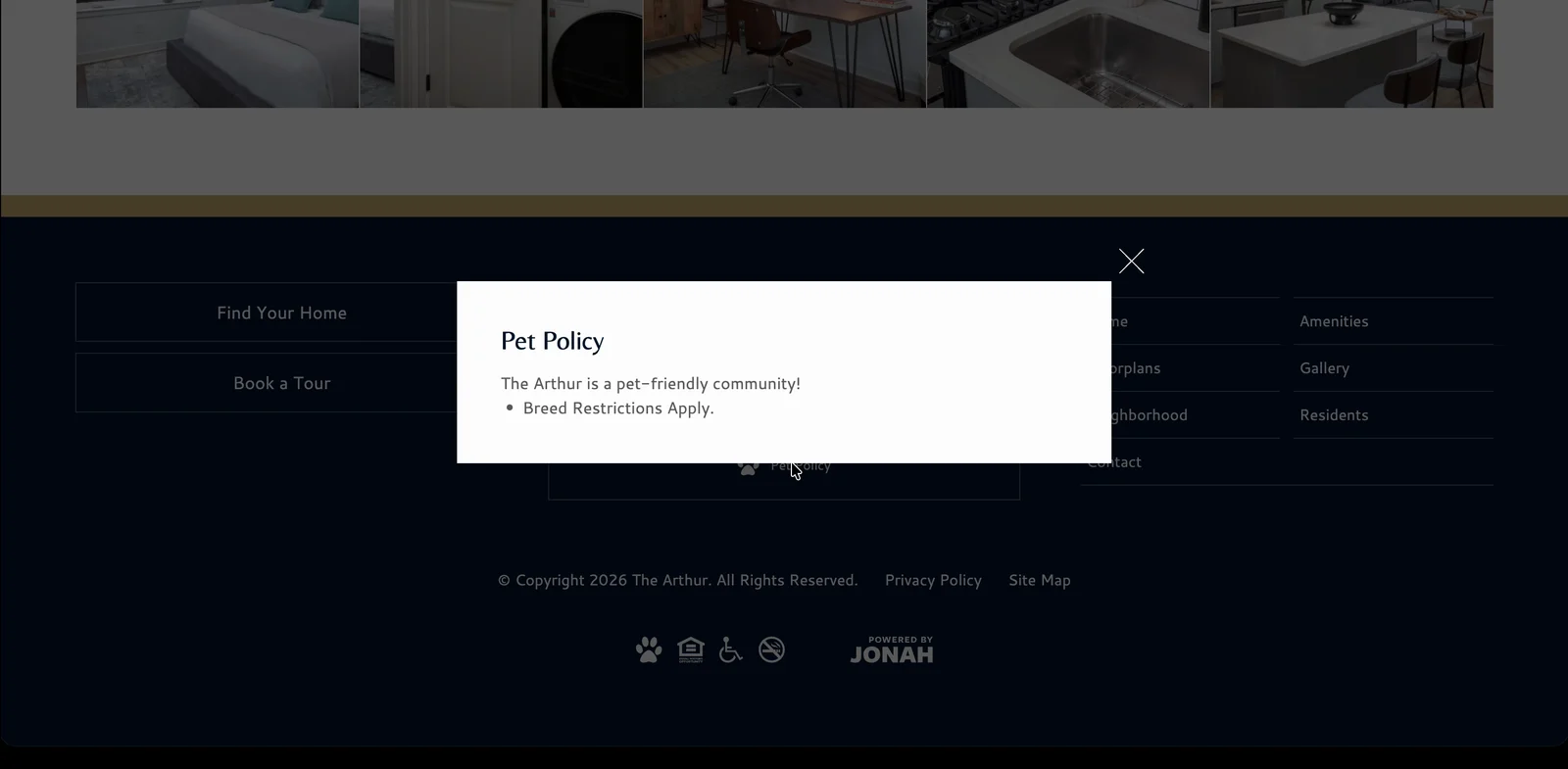
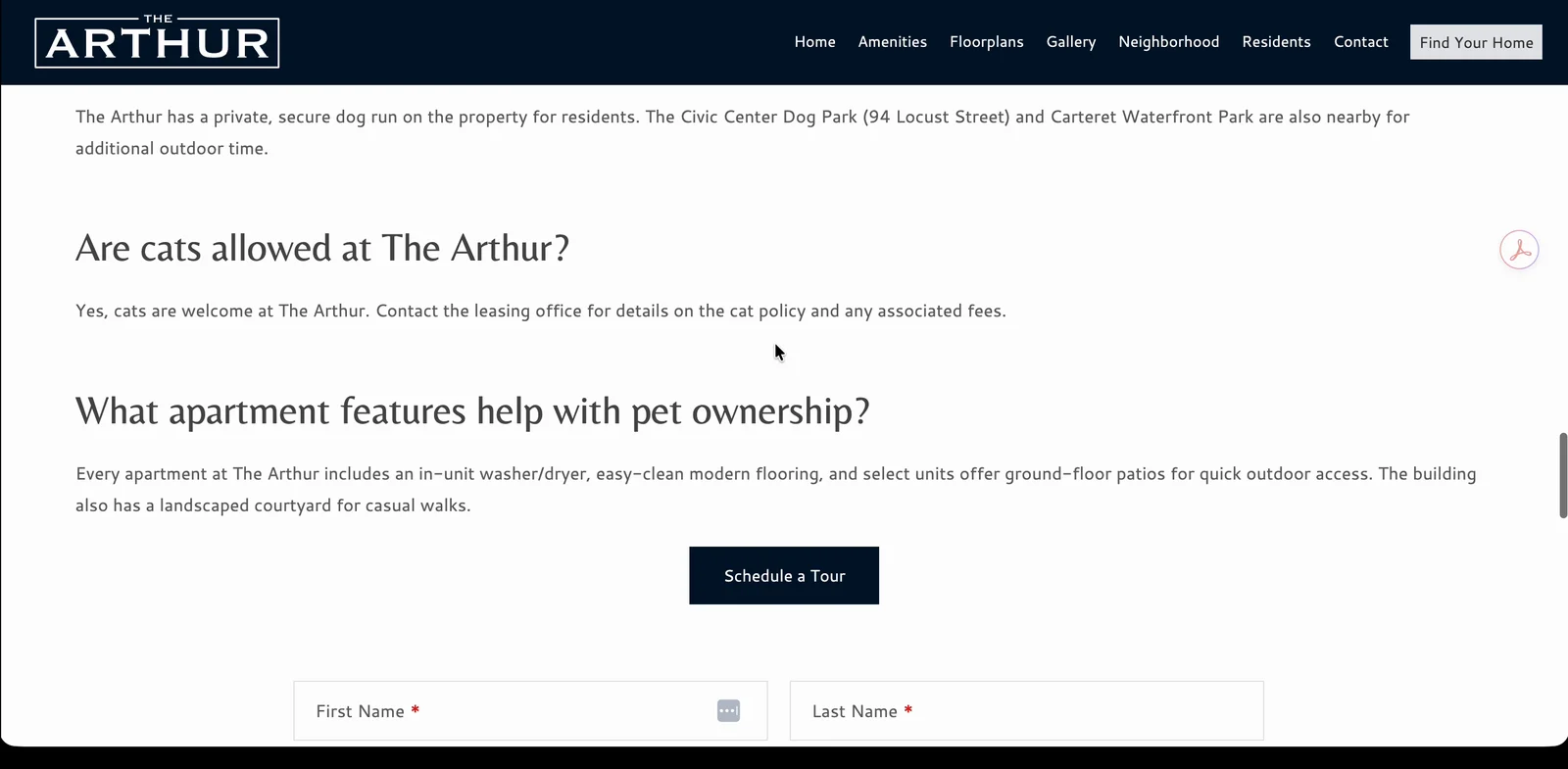
The important detail is the wording. Renters do not search "pet policy." They search "pet friendly." Those are different words because they carry different feelings, and the page has to be named after the renter's phrase, not the leasing office's.
The rest is just taking the question seriously. Where the dog run is. Whether cats are welcome. What the real costs are. Which features in the unit make life with an animal easier. A renter with a dog is making a decision about where they live, and they will choose the community that treats the question like it matters.
What happened next
The AI assistants started quoting the page back
This is the part worth understanding. Google's AI Mode does not just name the community, it cites the page as its source and repeats the specific detail the page added.
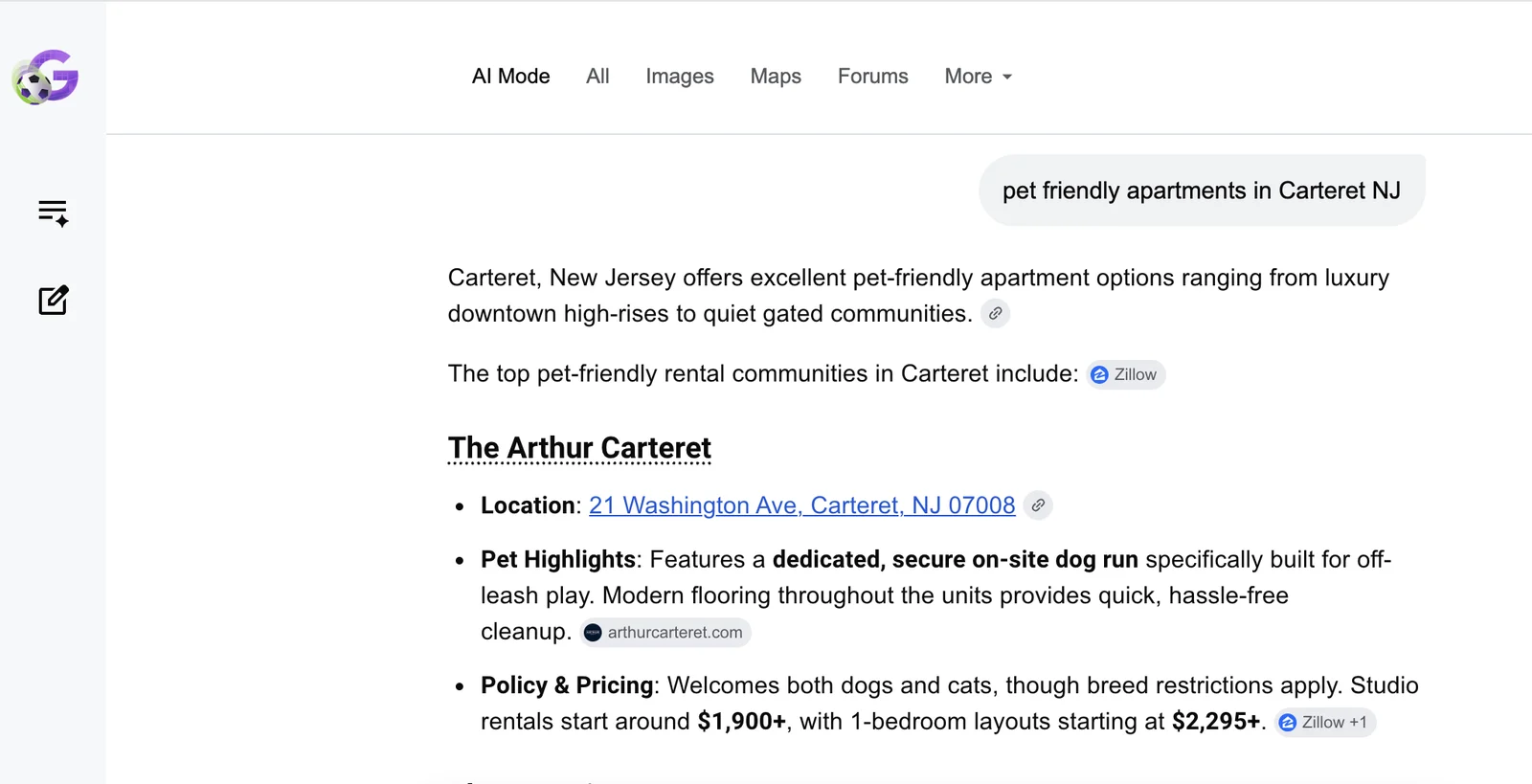
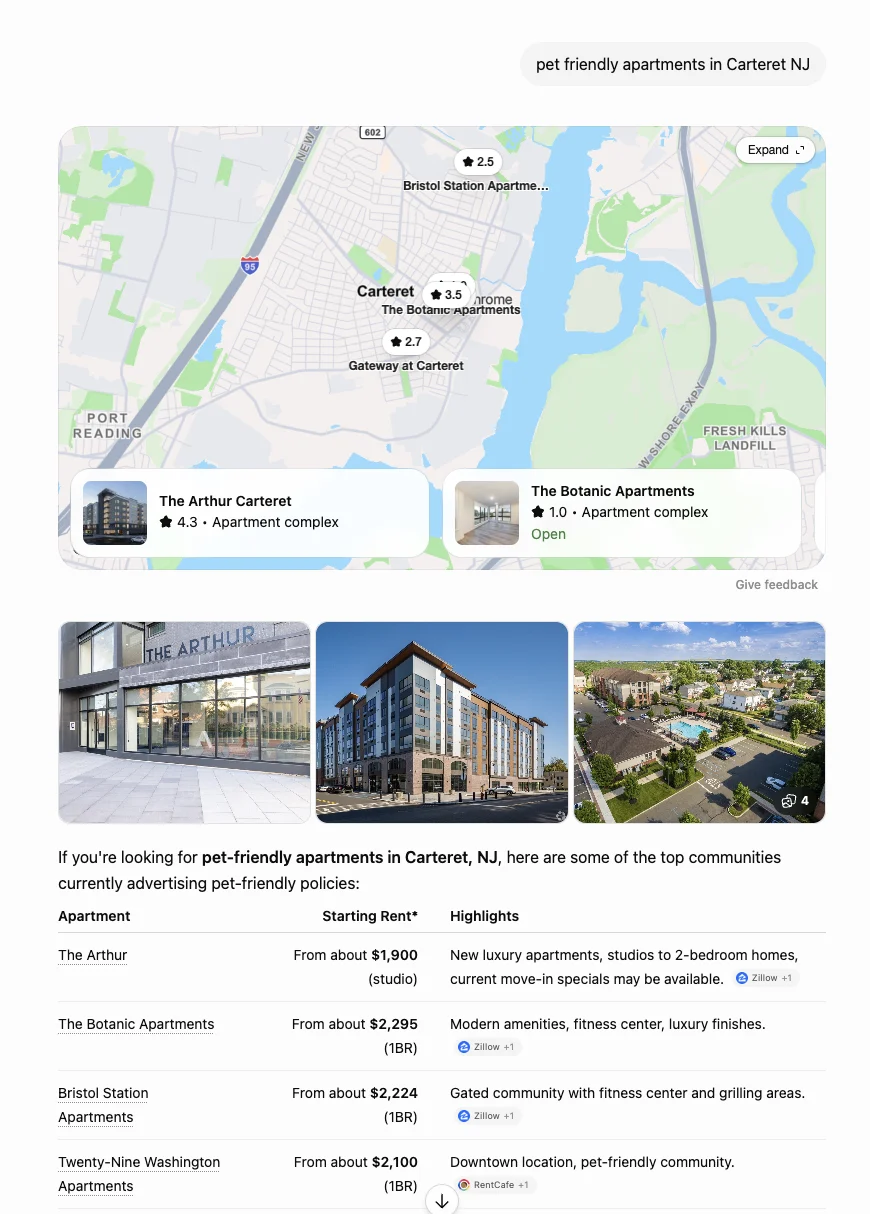
Both assistants are doing the same thing. They need a specific answer to a specific question, and they will take it from whoever actually wrote one down. For years that was a ranking game. Now it is a sourcing game, and the community with the real page is the only one that can be sourced.
Note what is not happening here. Nobody optimised for the phrase "dedicated, secure on-site dog run." We just described the dog run properly on a page about pets, and the assistant found it and used those words.
An honest note on timing: these were captured in July 2026, and AI answers move constantly. Treat them as evidence that the mechanism works, not as a promise about what any assistant says today.
The mechanism
A page that answers, versus a page that lists
To show this cleanly without a client's data in the way, we built a demonstration property called The Juniper Rows and asked the same question against two different pages on it. The Juniper Rows is not a real community. It exists only as a teaching example, which the assistant notices and says out loud.
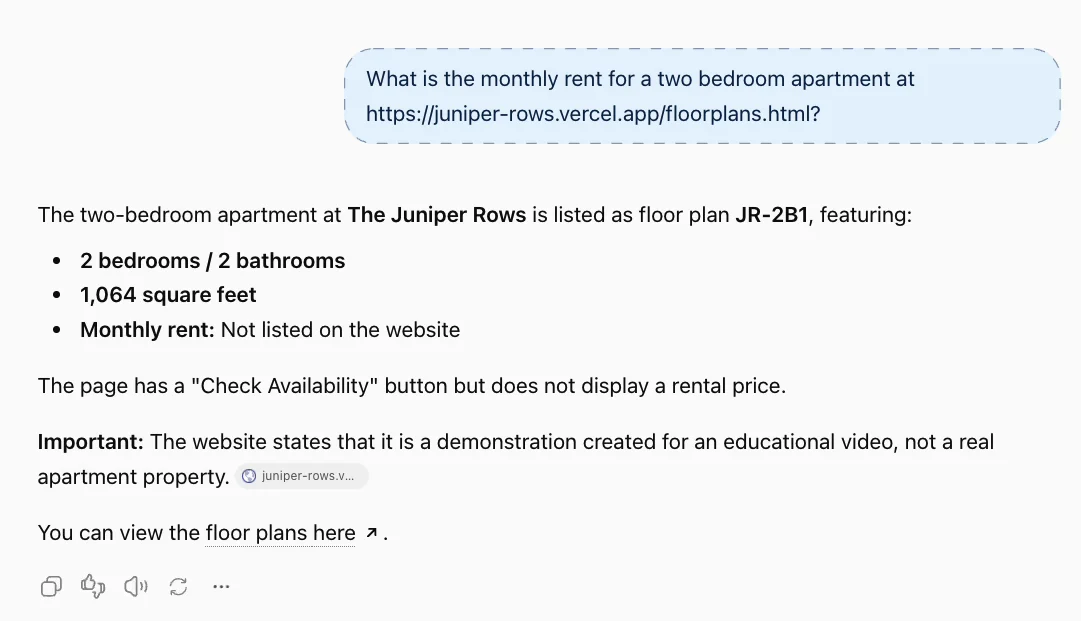
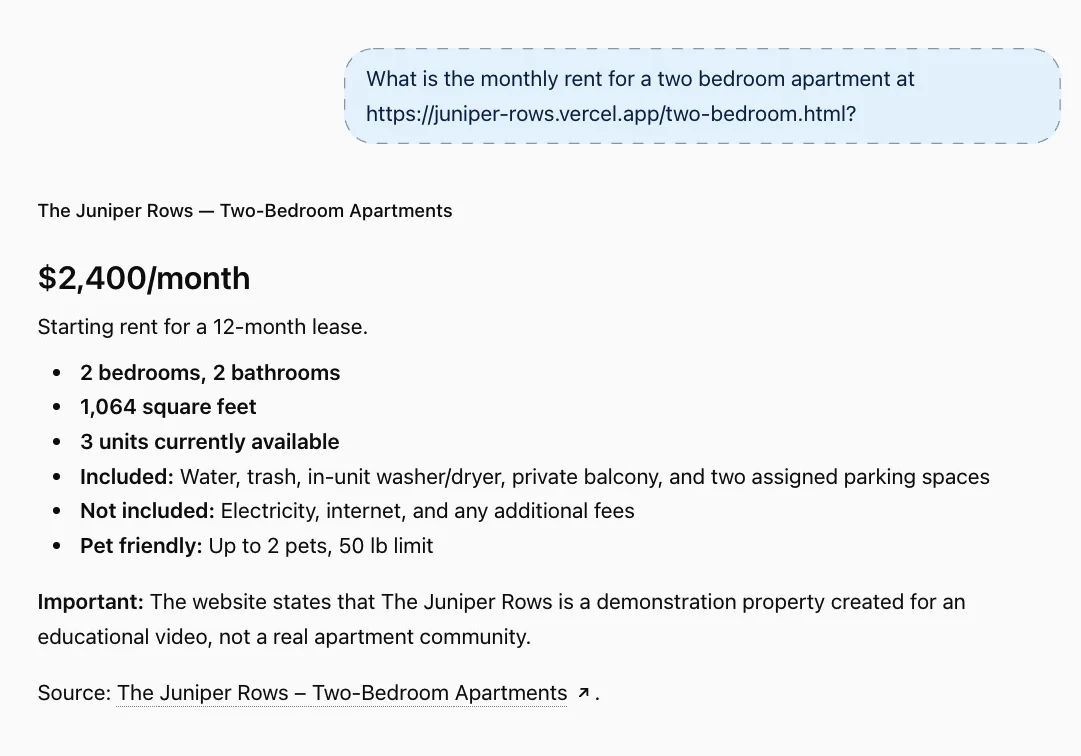
Same property, same question, same assistant. The only difference is whether a page existed that answered it. A floor plans grid with a Check Availability button is a list, and a list cannot be quoted. This is the whole argument, and it applies to every question a renter asks before they tour.
Do this
Find your version of the pet policy
Every community has one. The question that decides the lease, answered in a single line somewhere.
Ask your leasing team
What do people ask on every single tour, and every single phone call? That list is your content plan. It is usually four or five questions and they already know all of them.
Use the renter's words
Pet friendly, not pet policy. Parking, not parking accommodations. Write the page name the way somebody would type it into a phone.
Answer with specifics
Numbers, names, distances, costs. Vague copy cannot be quoted by an assistant and does not convince a renter either. The specifics are the entire value.
Give it a real page
Its own address, its own headings, visible in the page itself rather than hidden inside a popup or an accordion that only opens on click.
Help it get found
Link to it from your main navigation and your floor plan pages, and submit it through Search Console the day it goes live rather than waiting to be discovered.
Check what the assistants say
Ask ChatGPT and Google AI Mode who they recommend in your market. Do it monthly. It takes two minutes and it is the only way to know where you actually stand.
FAQ
Questions from property managers
Why does "pet friendly" matter more than "pet policy"?
They are different words because they are different feelings. "Pet policy" is what a property manager calls the rules. "Pet friendly" is what a renter types when they are trying to find out whether their dog is welcome somewhere. Naming the page after the renter's phrase rather than your internal one is most of the work.
We already list our pet policy. Is that not enough?
Usually it is two lines in a popup, which is what we found on the community below. A popup is not a page. It cannot rank, it is often invisible to the tools that read your site, and it does not answer the question a renter with a dog is actually asking, which is whether their life works in your building.
What should a real pet page answer?
Whether dogs and cats are both allowed, the weight and breed limits in plain language, the real deposit and monthly pet rent, whether there is a dog run on site and where, which apartment features help pet owners, and what is nearby. Every one of those is a question a renter asks before touring, and every one of them is a sentence an AI assistant can quote.
How long until something happens?
For the community below, the AI assistants began naming the property for pet searches within about two weeks of the page going live. That was faster than usual and we would not promise that timeline to anyone. What is reliable is the mechanism: a page that answers a specific question is the thing that gets quoted.
Does this only work for pets?
No. Pets is just the clearest example because the demand is so obvious and the typical page is so thin. Every community has its own version: parking, in-unit laundry, work from home space, short-term leases, what the commute actually looks like. The pattern is the same. Find the question that decides the lease, and give it a real page.
Will this help with Google as well as AI?
Yes, and it is the same work. Both read your site to decide what you are about. A dedicated page targeting the phrase renters actually use gives Google something to rank and gives the AI assistants something to cite. You are not choosing between them.
Part of our apartment and multifamily SEO work. See also Multifamily AI Visibility · 55+ Communities
What question is your website answering in one line?
No sales team. No runaround. Just a straight conversation with the person who runs the agency.

Have a question?
Text us and get a real answer, not a bot.
Text Us Now (732) 784-8847Usually responds within the hour
Free Visibility Report
See where you rank vs. competitors
No commitment required